

News · 12-06-2021
Temporary shelter found turtle
Instructions temporary care (emergency shelter) of a turtle.
As a non-profit foundation run entirely by volunteers and based in the north of the Netherlands (Fryslân), we cannot always collect a turtle immediately. Whether the animal is injured is an important consideration. By the way, we only pick up turtles that have been refused to be transported by the local animal ambulance. In addition, we work with various volunteers across the Netherlands, who regularly transport turtles to us. It is also possible to bring the turtle yourself, you will immediately get a VIP tour as a thank you for bringing:) You do not have to pay as a finder for bringing a found turtle!
When bringing or picking up a turtle, however, we expect that you sign a stray animal declaration and declaration of refusal by Dierenambulance. Without these documents, we are in a very weak legal position in the fight we are waging against this suffering.
In order to make the temporary stay as comfortable and animal-friendly as possible, we have prepared the following instructions.
A turtle is a reptile and therefore cold-blooded. When a turtle is cold/cool it will be very quiet, sleep a lot and won't want to eat. This is not a problem for a turtle, so it is not pathetic not to feed a turtle. They can go without food for weeks if they have to. So a few days to a week is even quite normal for them.
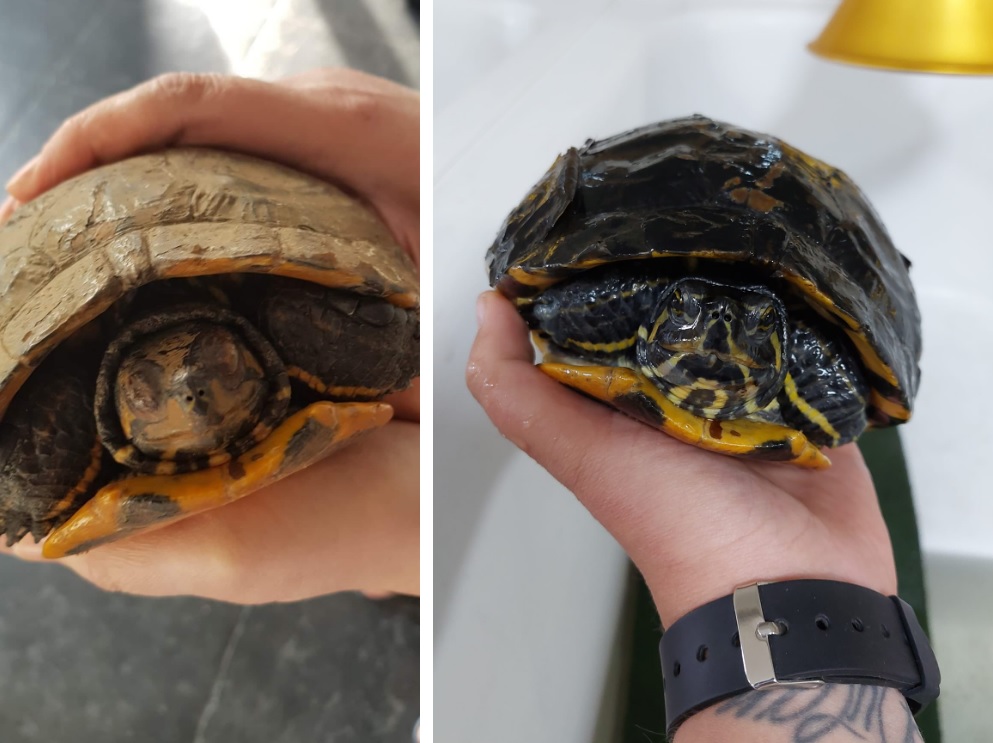
A turtle, species unknown, temporarily saved.
When it is not clear whether it is a land or aquatic turtle or that the transport of the turtle will take place within 2 days, it is best to put the turtle “dry”. Place the turtle on a dry towel in a bucket, cover the bucket with a dark towel. Secure this towel around well with a rope, lace or elastic. Place the bucket in a cool, quiet place. The turtle will now go to sleep and experience very little of the environment. The advantage is that the turtle can relax quietly. Always call the shelter or email a clear picture to possibly get an explanation if it is a rare species. For the common water species such as the red cheek, yellow cheek, yellow-bellied or the Greek or Russian tortoise.
If the species is known and the transport will take more than 2 days.
Aquatic turtle.
Take a slightly larger plastic container, fill it with tap water (+/-15 degrees). The water level should be as high as the length of the turtle. If the turtle falls over, it can always turn over again. Place a stone in the tank, on which the turtle can sit dry. Turtles are good escapers, so make sure the tank is high enough or cover it with mesh or a net. Place the container somewhere in a cool, quiet, and dark place, but at a height above the ground. Preferably do not feed the turtle. We then get a wrong picture when we do a stool examination. In addition, a turtle can go without food for a very long time and as long as it stays cool, so below 18 degrees, it can not digest food and it is not hungry either. Most turtles carry parasites, certain food can, on the contrary, exacerbate the infection, so it is better not to feed.
Tortoise.
Take a sufficiently high plastic container, put one or a few towels in this container. Place a small plate or shallow dish in the bowl of tap water. Place the container in a quiet, cool, and dark place. The turtle will then go to sleep and will not eat. The advantage is that the turtle now experiences little of its environment. Sometimes tortoises remain active, in which case you can feed. Give only dandelion, without stem. You can feed the flower and the leaf. Always rinse them well first and make sure they are picked in a safe place. As a safe alternative, you can give andijvie. Do not give any other food, this will give a wrong picture when the stool examination is done in the shelter. In addition, certain foods such as, fruit, lettuce and tomato can cause diarrhea. Most turtles carry parasites that they have acquired in the wild, certain foods as mentioned above, can actually exacerbate this infection.
Watch out!
Turtles can carry nasty parasites and viruses. In addition, all turtles carry salmonella with them. So pay attention to where the turtle and the environment has made contact with. Always wash your hands after touching the turtle or wear gloves.
When the turtle has been picked up by us, you can best clean all materials such as the plastic tray, drinking bowls, etc. with chlorine in cold water and leave it to soak for 20 to 30 minutes. After you have rinsed everything well, you are sure that everything is disinfected.